
September 29, 2026

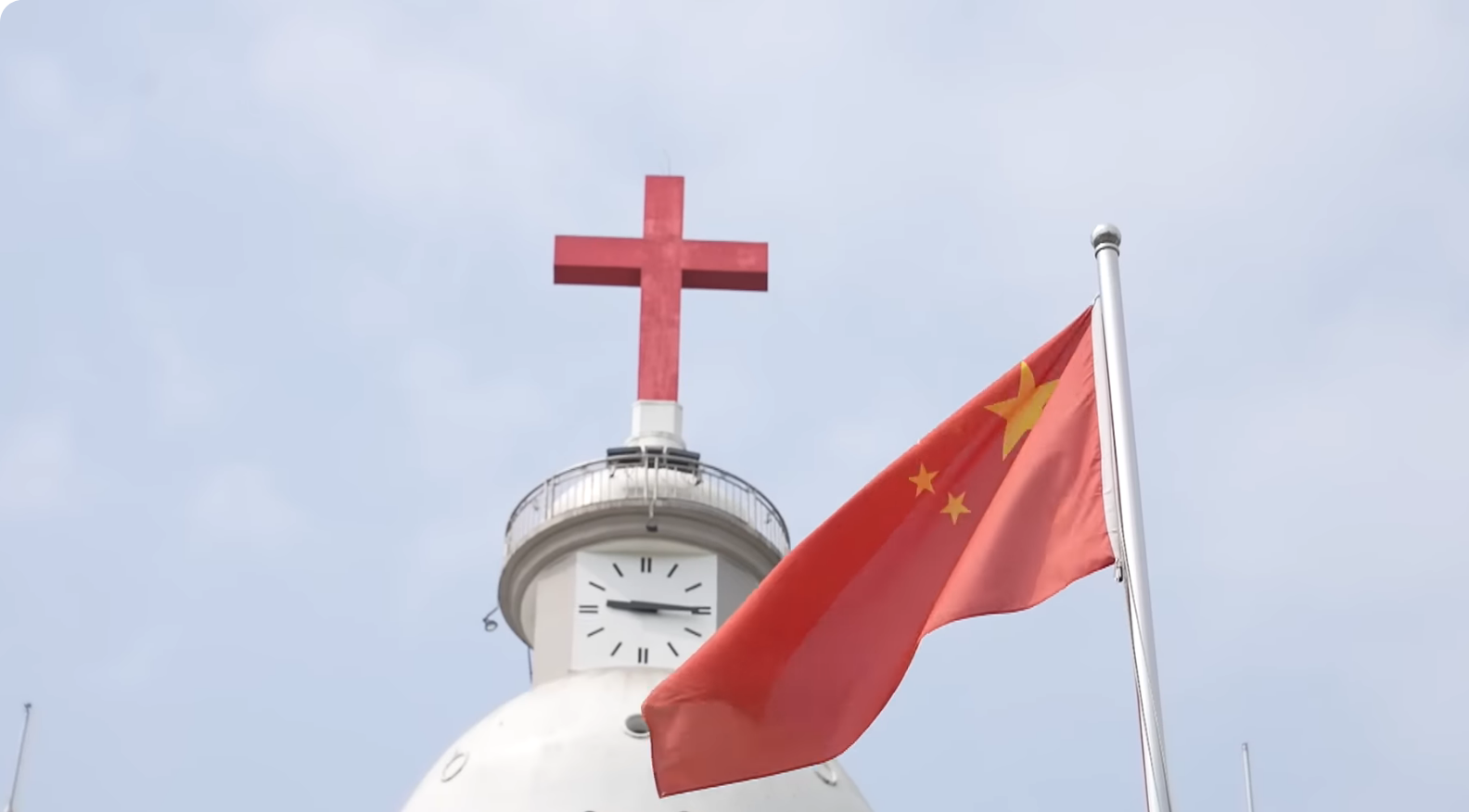
Chinese President Xi Jinping’s visit to the United States last week was met with a series of protests in Washington, D.C. Such a public display of opposition is entirely warranted. Xi took over as General Secretary of the Chinese Communist Party (CCP) in 2012 and has occupied the presidency since 2013, and his tenure can only be characterized as a relentless project of brutal repression of the country’s religious communities, deploying both heavy-handed, conventional tactics and cutting edge, technological capabilities.
Back in 2019, RFI President Emeritus Tom Farr observed, “The assault on religion currently taking place under President Xi Jinping is the most comprehensive attempt to manipulate and control religious communities in that country since the Cultural Revolution.” This is even truer today.

On September 24th, RFI President David Trimble joined a rally at Freedom Plaza in the heart of Washington, D.C. that brought together Tibetan Buddhists, Christians, Falun Gong practitioners, Uyghurs, and others representing faith communities living under Chinese persecution. Trimble emphasized the severity of the CCP’s religious repression and urged U.S. leadership to confront it aggressively and unequivocally. Recounting the response of the United States to other instances of severe persecution in modern history, Trimble observed:
We said enough to the horrific persecution in Darfur, in the Sudan, enough to the genocide in Rwanda, enough to the systematic persecution of Rohingya Muslims, enough to the ISIS-genocide of Christians and Yezidis in Iraq; and now we must say enough, enough to the CCP’s forced organ harvesting of the Falun Gong and enough to the persecution of other faith communities at the hands of the CCP.
Later Trimble remarked:
We give thanks to America’s Founders who had the wisdom to place into the laws of this land a timeless principle, a principle that supports the right of every man, woman, boy, and girl to seek ultimate truth and meaning in a transcendent reality, and to order their lives accordingly. Today we stand together in support of that principle that is not just applicable here in the United States of America but in fact is a universal principle of freedom.
But what the United States can and should do, especially given the enormity of China’s economic and military power and the range of U.S. interests implicated by that power — including the fierce race for superiority in artificial intelligence — is undoubtedly complex. Disentangling China’s religious freedom violations from other pressing issues that demand U.S. attention is difficult. But America must find ways to enable religious freedom diplomacy to bolster other U.S. interests. As Trimble argued last fall, U.S. foreign policy must not allow economic considerations to compromise humanitarian concerns, to include the protection of religious freedom. Instead, U.S. leaders should look for creative and complementary ways to advance both.
Writing following a sweep of arrests of house church leaders and members in China in October 2025, Trimble oberserved:
In addition to redesignating China as a Country to Particular Concern(CPC), the United States should continue to integrate into its China engagement strategy the diplomatic tools that a CPC designation makes available. Though partially leveraged in America’s past relations with Beijing, far more could be done to put CPC designation to use vis-a-vis China and other countries on the list. Other means of pressuring China should also be explored, to include harnessing U.S. economic power, as former Vice President Mike Pence argued [in which he] called for using trade and visa policies to induce religious freedom violators like China, Nigeria, and India to change course.
“Ensuring that religious freedom remains a priority for America’s diplomatic engagement with China will be among the most difficult challenges before Jane Lynch once she is confirmed by the Senate to serve as U.S. Ambassador at Large for International Religious Freedom,” Trimble later stated. “But it is one that I am confident Ms. Lynch will be determined to address.”
THE RFI BLOG
Oct. 08, 2026
RFI President Discusses Religious Persecution in China and Nigeria on The Drew Mariani Show

Sep. 29, 2026
RFI President Addresses Rally Against Brutal Persecution at the Hands of China’s Xi Jinping

Sep. 25, 2026
The Friendship That Changed International Religious Freedom for America and the World

Aug. 28, 2026
Attorney General Blanche Makes Important Mark for Religious Liberty and Parental Rights
Aug. 14, 2026
