January 6, 2023
Jeremy Barker, Director of RFI’s Middle East Action Team, recently authored an op-ed for The Hill on the U.S. State Department’s latest report on severe violators of religious freedom and the importance of ensuring that transparency and accountability accompany the designation process. He writes:
On Dec. 2, Secretary of State Antony Blinken announced the latest designations of severe violators of religious freedom. The annual designations are intended to serve as a critical tool in shaping U.S. international religious freedom policy and triggering clear, coherent actions to hold persecutors accountable and to advance greater respect for religious freedom where it is at risk.
As longtime State Department official Knox Thames commented, they can be the “most potent tool in [the department’s] religious freedom toolbox.” However, these designations will be most effective when the rationale is clear, the ramifications are real, and they are part of a roadmap toward progress.
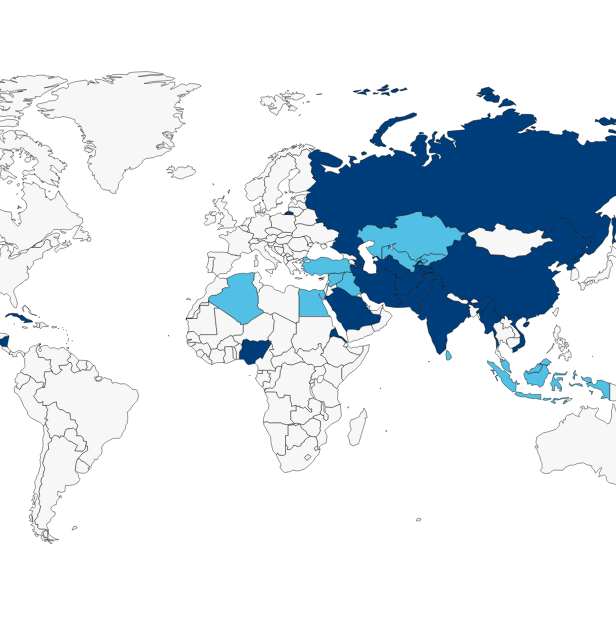
As required by the 1998 International Religious Freedom Act (IRFA), the Secretary of State is to name Countries of Particular Concern (CPCs) and Entities of Particular Concern (EPCs) that have “engaged in or tolerated systematic, ongoing and egregious violations of religious freedom.” A 2016 amendment to that law created an additional Special Watch List (SWL) category for those who do not fully meet the most egregious standard but are determined to engage in or tolerate severe violations of religious freedom.
In the 2022 determinations, Blinken included as CPCs: Burma, China, Cuba, Eritrea, Iran, Nicaragua, North Korea, Pakistan, Russia, Saudi Arabia, Tajikistan and Turkmenistan. The SWL included Algeria, the Central African Republic, Comoros and Vietnam.
While many of those determinations are accurate, there are also some notable exceptions. Afghanistan is not included as a CPC, despite the horrific conditions for religious freedom, though the Taliban itself is included as an EPC. The Christian nongovernmental organization Open Doors listed Afghanistan at the top of its World Watch List of the worst places to be a Christian.
Read the full article: “Will U.S. Religious Freedom Designations Drive Real Actions?“
THE RFI BLOG
Jul. 26, 2024
Myths of Religious Nationalism in America and Abroad
Jul. 26, 2024
France’s Olympic Hijab Ban Violates International Law And Exacerbates Tensions
Jul. 25, 2024
RFI Briefs USCIRF on Lessons from 25 Years of U.S. Designating Religious Freedom Violators
Jul. 23, 2024
Thought Police: Protecting the People from Prayer
Jul. 22, 2024
A Religious “Delaware”: Establishing a State Haven for Religious Corporations
CORNERSTONE FORUM
Jun. 26, 2024
Challenges to Religious Freedom in Iraq and the Critical Need for Action

May. 05, 2023
Public Bioethics & the Failure of Expressive Individualism

Apr. 28, 2023
Religious Liberty in American Higher Education

Mar. 03, 2023
Scotland’s Kate Forbes and the March of Secularism
Dec. 09, 2022